

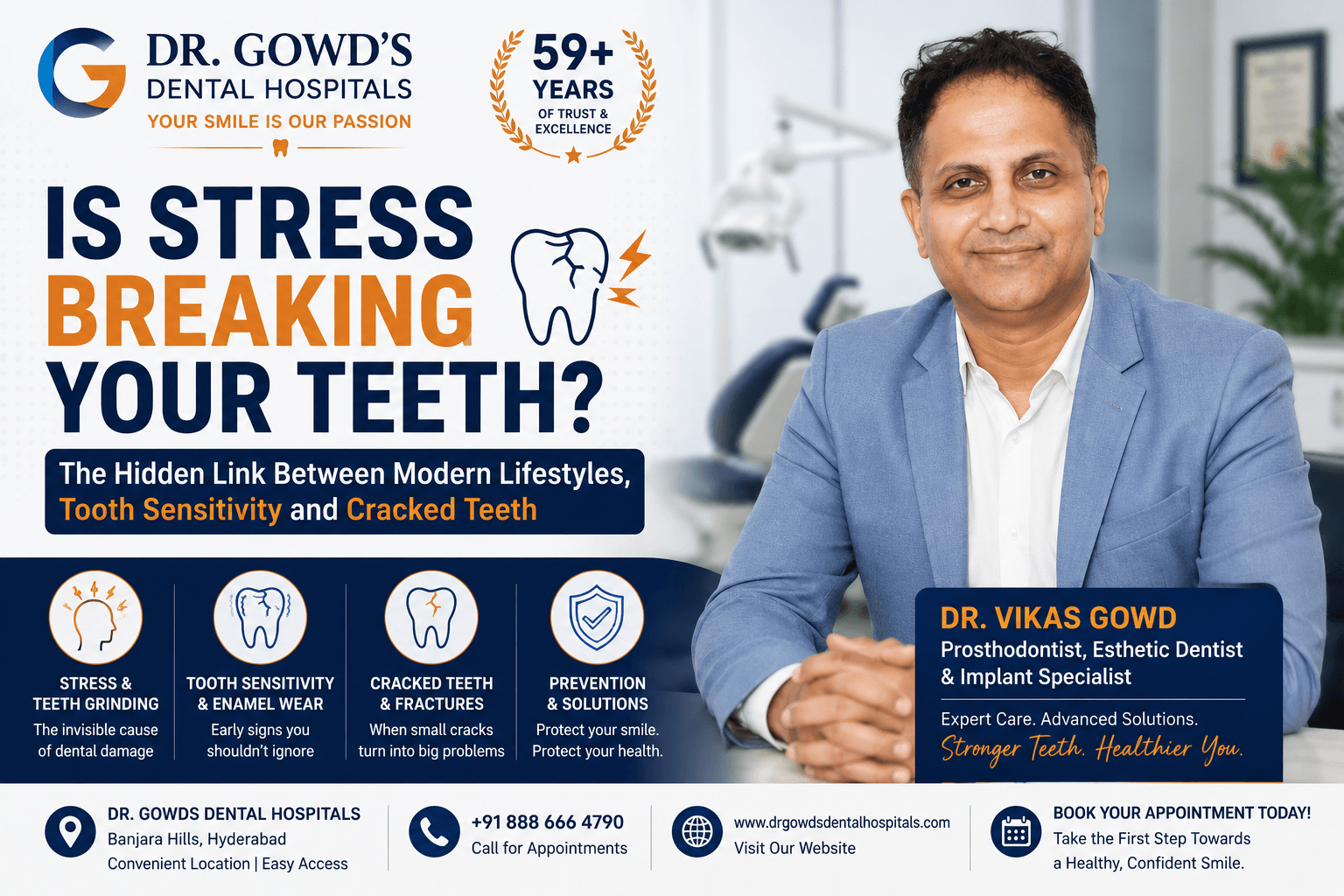
By Dr. Vikas Gowd, Prosthodontist, Esthetic Dentist & Implant Specialist
Most people believe that tooth sensitivity is caused only by cavities or eating too many sweets. Surprisingly, one of the biggest reasons behind sensitive teeth today is stress.
Over the last few years, especially after the COVID-19 pandemic, dentists across the world have noticed a significant rise in patients presenting with tooth sensitivity, excessive tooth wear (attrition), jaw pain, cracked teeth, and even vertical tooth fractures. This trend has become so common that many experts now refer to it as the “pandemic bruxism” phenomenon.
How Stress Affects Your Teeth

Stress Makes You Grind Your Teeth (Bruxism)
When we are under stress, anxiety or emotional pressure, many of us unknowingly clench or grind our teeth—a condition called bruxism. This may happen during the day while concentrating or, more commonly, during sleep.
Grinding generates tremendous pressure on the teeth—often much greater than the force used while chewing food.
Over time, this can lead to:
- Tooth sensitivity
- Wearing away of enamel (attrition)
- Chipped teeth
- Cracks in teeth
- Jaw pain and headaches
- Fractured fillings and crowns
- Vertical root or tooth fractures that may ultimately require extraction
A systematic review and meta-analysis has shown that individuals experiencing stress are significantly more likely to develop bruxism than those without stress.
Why Are Dentists Seeing More Cracked Teeth After COVID?
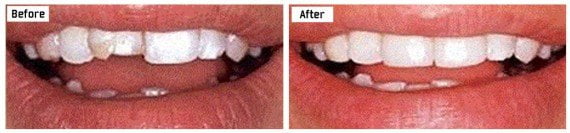
Following the COVID-19 pandemic, dentists worldwide reported an unexpected increase in cracked and fractured teeth.
The reasons are understandable:
- Increased mental stress
- Financial uncertainty
- Working from home
- Poor sleep quality
- Anxiety
- Longer hours on computers
The British Dental Journal highlighted this increase, noting that elevated stress levels during the pandemic were associated with increased bruxism and a higher risk of tooth cracks and fractures.
Many patients are completely unaware that they grind their teeth until they wake up with tooth sensitivity, jaw pain, or suddenly experience a cracked tooth.
How Modern Work Lifestyles Affect Your Teeth
The Software Professional’s Lifestyle: A Perfect Storm
In technology hubs such as Hyderabad, Bengaluru and Pune, dentists are increasingly treating software professionals who work night shifts or irregular schedules.
This lifestyle contributes to dental problems in several ways:
- Skipping meals
- Eating late at night
- Frequent coffee and energy drinks
- High stress levels
- Poor sleep
- Acid reflux due to irregular eating habits
When meals are delayed or consumed late, the risk of acid reflux (GERD) increases in susceptible individuals. Acid from the stomach can reach the mouth and gradually dissolve the protective enamel covering the teeth.
This process is known as dental erosion.
Unlike tooth wear caused by grinding, erosion is chemical in nature. When erosion and grinding occur together, tooth damage progresses much faster.
Attrition vs Erosion: What’s the Difference?
These terms are often confused.
Attrition is mechanical wear caused by tooth grinding or clenching.
Erosion is chemical wear caused by acids—from acidic beverages or from stomach acid during acid reflux.
When both occur together, teeth become:
- Extremely sensitive
- Shorter in height
- Yellow due to exposed dentin
- More likely to develop cracks
- More prone to fractures while chewing
Signs Your Teeth May Be Under Stress
Common Warning Signs
Do not ignore these symptoms:
- Sensitivity to cold or sweets
- Morning jaw pain
- Headaches after waking
- Clicking in the jaw joint
- Flattened teeth
- Teeth becoming shorter
- Cracked fillings
- Sudden pain while biting
- Unexplained fractures of otherwise healthy teeth
Early diagnosis can often prevent major damage.
How to Protect Your Teeth from Stress-Related Damage
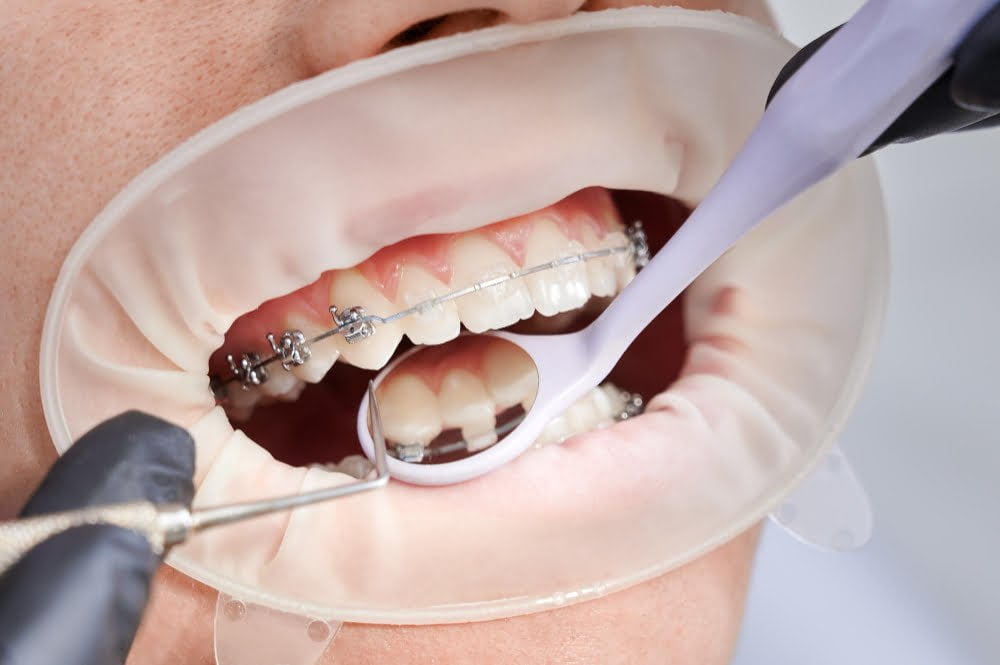
Fortunately, these problems are preventable.
Some simple measures include:
- Managing stress through exercise, meditation or relaxation techniques.
- Maintaining regular meal timings.
- Avoiding excessive coffee and acidic drinks.
- Seeking treatment for acid reflux if you frequently experience heartburn.
- Wearing a professionally fabricated night guard if you grind your teeth.
- Visiting your dentist regularly so early signs of tooth wear can be detected before irreversible damage occurs.
The Bottom Line
Our teeth are often silent victims of modern lifestyles. Stress, poor sleep, irregular eating habits and acid reflux are affecting oral health more than ever before.
The rise in tooth sensitivity, enamel wear, cracked teeth and vertical fractures is not merely a dental problem—it reflects how our bodies respond to chronic stress and unhealthy routines.
If you notice increasing sensitivity, worn teeth or pain while chewing, don’t ignore it. Early diagnosis and timely intervention can often save your natural teeth and prevent extensive treatment later.
Your smile doesn’t just reflect your oral health—it reflects your overall wellbeing.
Finding the best dental hospital in hyderabad requires considering factors such as experience, technology, treatment options, and patient trust. With 59+ years of excellence, experienced specialists, and advanced dental technology, Dr Gowds Dental Hospitals continues to be a trusted destination for comprehensive dental care in Hyderabad.
Whether you need preventive care, smile enhancement, orthodontics, or advanced dental implants, choosing a trusted dental clinic can significantly improve your oral health and confidence.


