

Losing most or all of your teeth can affect much more than your smile. Difficulty chewing, changes in speech, discomfort from loose dentures, and gradual changes in facial support can make everyday life challenging.
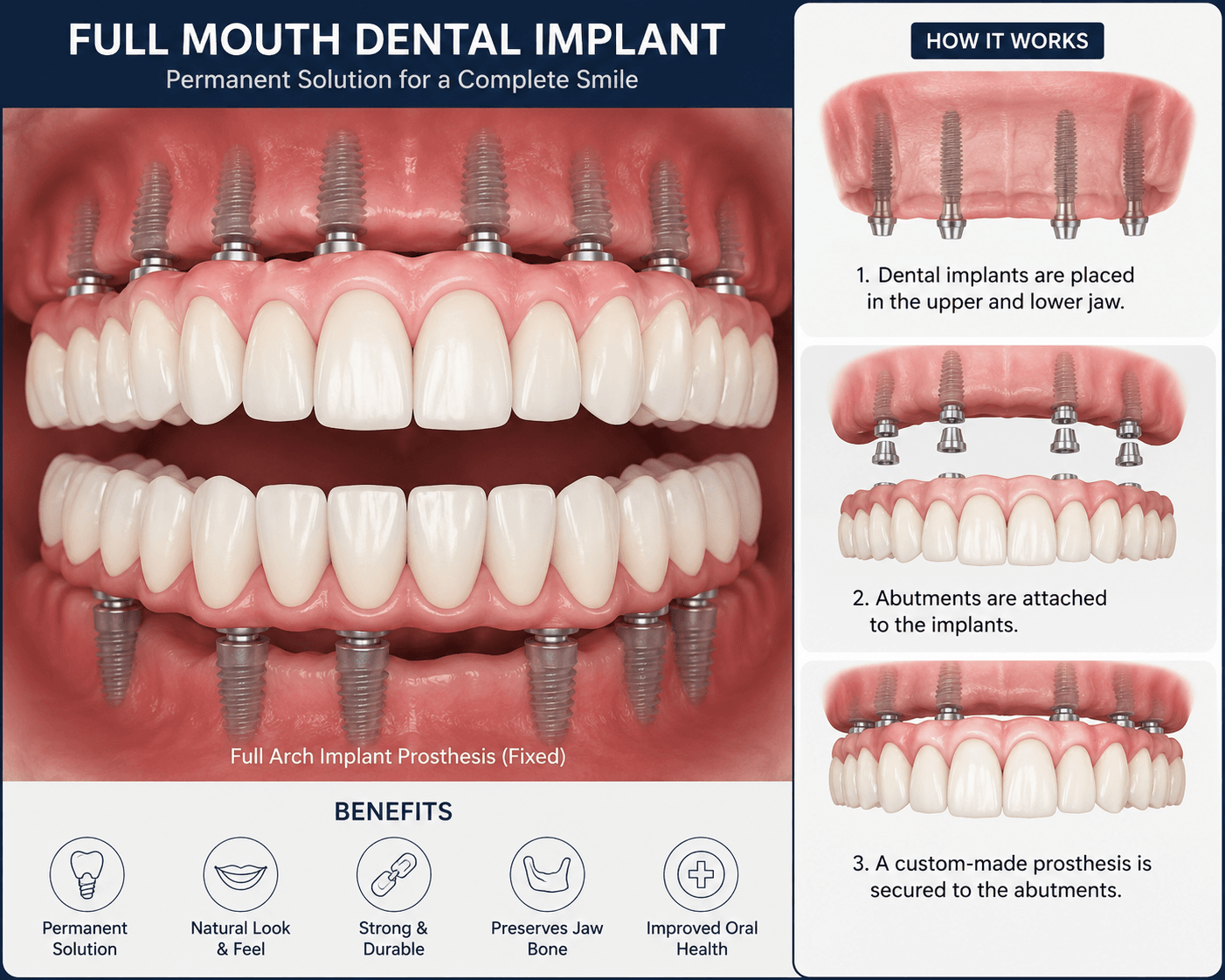
Full mouth dental implants in Hyderabad offer a fixed, implant-supported approach to replacing an entire arch or both arches of missing or failing teeth. Unlike conventional removable dentures, dental implants are anchored into the jawbone and can support fixed teeth designed to restore chewing function, appearance, and stability.
If you are researching full mouth dental implant cost in Hyderabad, it is important to understand that there is no single price applicable to every patient. The final cost depends on the number of implants, bone condition, implant system, prosthetic material, surgical technique, and additional procedures that may be required.
This guide explains the treatment options, approximate costs, procedure, recovery, benefits, and factors that influence the price.
What Are Full Mouth Dental Implants?
View this post on Instagram
Full mouth dental implants are a comprehensive tooth-replacement treatment for patients who have lost most or all of their teeth, or whose remaining teeth are severely damaged and may not be suitable for long-term restoration.
Instead of replacing every missing tooth with an individual implant, several strategically positioned implants can be used to support a fixed full-arch prosthesis.
Depending on the patient’s condition, treatment may involve:
- All-on-4 dental implants
- All-on-6 dental implants
- All-on-X implant rehabilitation
- Implant-supported overdentures
- Conventional implant-supported bridges
- Full-mouth rehabilitation using fixed implant-supported teeth
The appropriate approach depends on the patient’s bone anatomy, oral health, bite, aesthetic requirements, and overall treatment goals.
Full Mouth Dental Implant Cost in Hyderabad
The cost of full mouth dental implants in Hyderabad can vary significantly between patients because the treatment is customized.
Based on current pricing information published by Dr. Gowds Dental Hospitals, indicative ranges include:
| Full Mouth Implant Treatment | Approximate Cost |
|---|---|
| Implant-supported overdentures | ₹1,50,000 – ₹3,50,000 per arch |
| All-on-4 dental implants | ₹2,50,000 – ₹6,50,000 per arch |
| All-on-6 dental implants | ₹4,00,000 – ₹8,50,000 per arch |
| Full-mouth rehabilitation, both jaws | Approximately ₹4,00,000 – ₹8,00,000+ |
These figures are indicative treatment ranges, not fixed quotations. The final cost can change depending on the implant system, prosthetic material, bone condition, number of implants, temporary teeth, extractions, bone grafting, sinus procedures, and other clinical requirements.
A detailed consultation and appropriate diagnostic imaging are therefore important before a final treatment estimate is provided.
Why Does Full Mouth Dental Implant Cost Vary?
Patients often notice substantial differences in implant prices between dental hospitals. This does not necessarily mean that one treatment is simply more expensive than another.
Several components contribute to the overall cost.
1. Number of Implants
A full-mouth treatment does not necessarily require one implant for every missing tooth.
For example, All-on-4 uses four strategically positioned implants to support a fixed full-arch prosthesis in suitable cases. All-on-6 uses six implants and may be considered when additional support is appropriate.
The number of implants required depends on the patient’s anatomy and treatment plan.
2. Implant Brand and System
Dental implants are available from different manufacturers and product ranges.
The implant system selected can affect the overall treatment cost. Your dentist should explain the implant brand, components, warranty information where applicable, and why a particular system is being recommended.
3. Prosthetic Material
The teeth attached to implants can be manufactured using different materials and designs.
Options may include:
- Acrylic-based prostheses
- Composite-based materials
- Porcelain or ceramic restorations
- Zirconia-based full-arch prostheses
The choice depends on factors such as aesthetics, strength, bite forces, treatment design, and budget.
4. Condition of the Jawbone
Adequate bone volume and quality are important for conventional implant placement.
Patients who have experienced significant bone loss may require additional procedures or alternative implant strategies.
5. Additional Procedures
The treatment plan may include procedures such as:
- Tooth extraction
- Bone grafting
- Sinus lift
- Temporary teeth
- Soft-tissue procedures
- Additional diagnostic imaging
For example, Dr. Gowds’ published guide lists indicative additional costs of approximately ₹10,000–₹25,000 for bone grafting and ₹20,000–₹45,000 for sinus lift procedures, although actual costs vary by case.
All-on-4 vs All-on-6 Dental Implants
Two commonly discussed approaches for full-arch implant rehabilitation are All-on-4 and All-on-6.
All-on-4 Dental Implants
All-on-4 uses four strategically placed implants to support a fixed prosthesis for an entire arch.
Potential advantages include:
- Fewer implants
- Fixed teeth
- Efficient full-arch rehabilitation
- Reduced surgical implant count
- Possible treatment for selected patients with reduced bone availability
Not every patient is suitable for the same implant configuration, so treatment planning is essential.
All-on-6 Dental Implants
All-on-6 uses six implants to support a full-arch restoration.
Additional implants may provide increased distribution of chewing forces in appropriately selected cases.
The decision between All-on-4, All-on-6, or another approach should be based on individual anatomy, bone availability, bite, prosthetic requirements, and the clinician’s treatment plan.
Who Can Benefit From Full Mouth Dental Implants?
Full mouth implant rehabilitation may be considered for patients who have:
- Lost most or all of their teeth
- Severely damaged remaining teeth
- Advanced tooth wear
- Repeated dental problems
- Loose or uncomfortable dentures
- Difficulty chewing with conventional dentures
- Extensive tooth loss affecting speech or confidence
However, having missing teeth does not automatically mean that full mouth implants are the right solution.
A comprehensive examination is required to evaluate oral and general health before treatment.
Full Mouth Dental Implant Procedure
The complete process typically involves several stages.
Step 1: Initial Consultation
The dentist evaluates your teeth, gums, bite, existing restorations, jawbone, and overall dental condition.
Your medical history and treatment expectations are also discussed.
Step 2: Digital Diagnosis and CBCT Scan
Three-dimensional CBCT imaging can help evaluate:
- Bone volume
- Bone density
- Nerve locations
- Sinus anatomy
- Implant positioning
- Areas requiring additional procedures
This information helps the implant team develop an individualized treatment plan.
Step 3: Treatment Planning
The implant position, prosthetic design, bite, smile, and overall rehabilitation are planned together.
For full-mouth cases, implant placement should not be considered separately from the final teeth. The position of the implants can influence the final prosthesis, hygiene access, bite, aesthetics, and long-term maintenance.
Step 4: Implant Placement
The implants are surgically placed into predetermined positions in the jaw.
Depending on the case, guided or digitally planned implant placement may be used.
Step 5: Temporary Teeth
Selected patients may receive temporary fixed teeth during the healing phase.
Immediate or early loading is case-dependent and should not be assumed to be appropriate for every patient.
Step 6: Healing and Osseointegration
The implants need time to integrate with the surrounding bone.
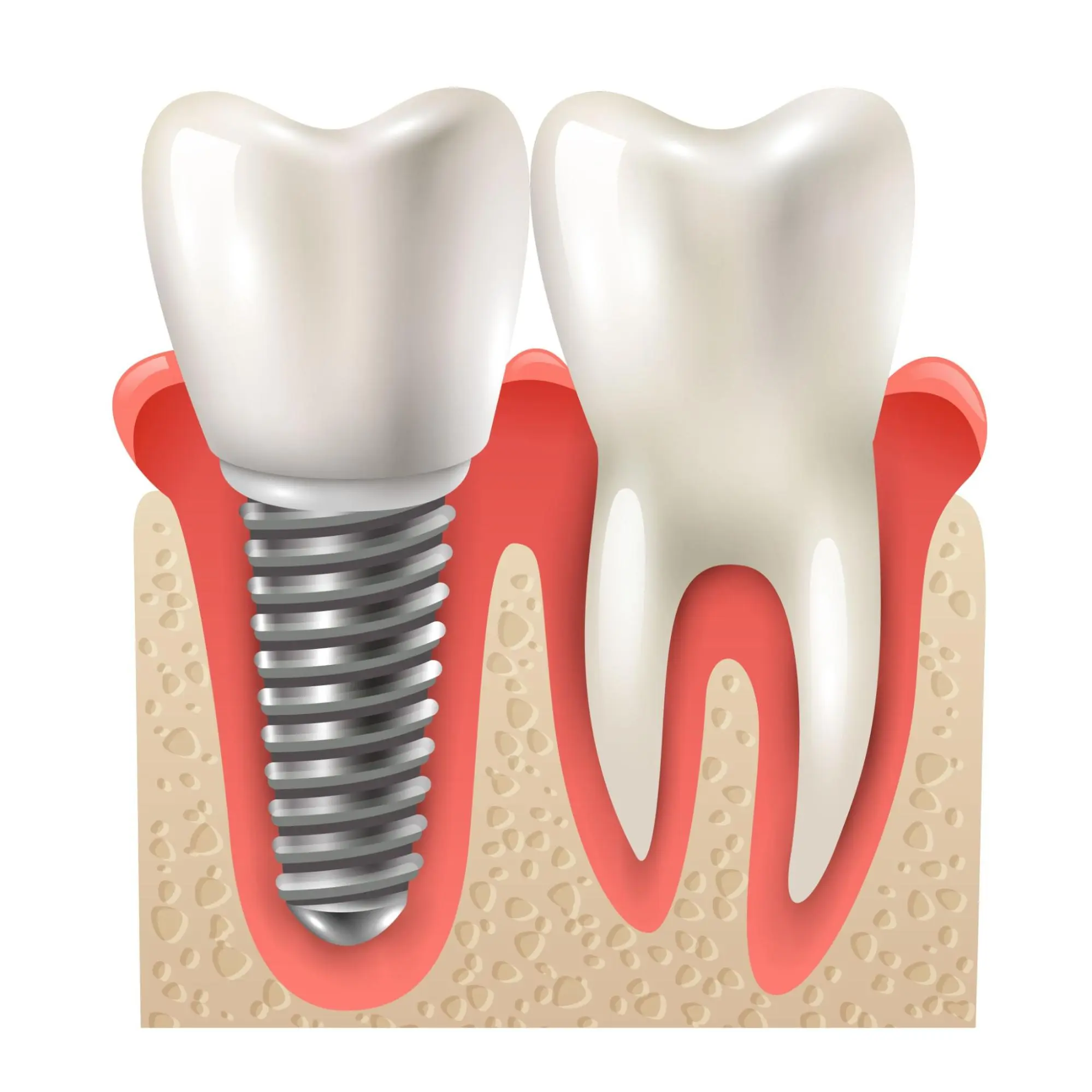
This biological process is called osseointegration.
Although temporary teeth may be provided in selected cases, complete biological healing can take several months.
Step 7: Final Prosthetic Teeth
After healing and clinical assessment, the final fixed prosthesis is fabricated and fitted.
The final restoration is designed around function, aesthetics, speech, bite, and maintenance requirements.
How Long Does Full Mouth Implant Treatment Take?
The overall treatment timeline varies according to the patient’s condition.
Some suitable patients may qualify for immediate or early fixed temporary teeth, while others may require a staged treatment approach.
Complete implant integration commonly takes several months. Dr. Gowds’ published information notes that osseointegration may take approximately 3–6 months, although individual healing times vary.
The total treatment timeline can be affected by:
- Bone grafting
- Tooth extractions
- Implant stability
- Healing response
- Prosthetic design
- Medical conditions
- Need for temporary restorations
Is Full Mouth Dental Implant Surgery Painful?
Implant surgery is performed using appropriate anesthesia, so patients generally should not experience sharp pain during the procedure.
Some swelling, soreness, or discomfort can occur after surgery. Your dental team will provide specific instructions regarding medication, diet, oral hygiene, and activity during recovery.
The amount of discomfort can vary according to the number of implants, surgical complexity, and individual healing response.
Full Mouth Implants vs Dentures
Both implants and dentures can replace missing teeth, but they work differently.
| Feature | Full Mouth Dental Implants | Conventional Dentures |
|---|---|---|
| Stability | Fixed or implant-supported | Removable |
| Chewing | Generally more stable | May move during chewing |
| Jawbone stimulation | Implant-supported | Does not provide the same stimulation |
| Maintenance | Requires professional and daily hygiene | Requires daily cleaning and maintenance |
| Long-term treatment | Designed as a long-term solution | May require replacement or adjustment |
| Surgical treatment | Yes | Usually no |
The appropriate option depends on your oral health, bone condition, medical status, expectations, and budget.
Benefits of Full Mouth Dental Implants
When appropriately planned and maintained, full-mouth implant rehabilitation can provide several functional benefits.
Improved Chewing
Fixed implant-supported teeth can provide greater stability than conventional removable dentures.
Improved Speech
Teeth that remain stable during speaking may help patients who struggle with loose or poorly fitting dentures.
Facial Support
A properly designed full-mouth restoration can contribute to dental and facial support lost with extensive tooth loss.
Better Stability
Implant-supported teeth are anchored to implants rather than resting only on the gums.
Long-Term Solution
Dental implants are designed as long-term tooth-replacement solutions. Longevity depends on implant health, prosthetic design, oral hygiene, maintenance, and individual risk factors.
Can You Get Full Mouth Implants With Bone Loss?
Bone loss does not necessarily mean that implant treatment is impossible.
Depending on the degree and location of bone loss, treatment options may include:
- Bone grafting
- Sinus augmentation
- Angled implant placement
- All-on-4 treatment
- Pterygoid implants
- Zygomatic implants in selected severe cases
The appropriate approach can only be determined after three-dimensional diagnostic evaluation.
Full Mouth Dental Implants and Digital Dentistry
Modern implant rehabilitation increasingly combines surgical planning with digital dentistry.
Digital workflows can assist with:
- CBCT-based treatment planning
- Digital impressions
- Implant positioning
- Surgical guides
- Prosthetic design
- CAD/CAM fabrication
- Communication between surgical and restorative teams
At Dr. Gowds Dental Hospitals, published treatment information describes the use of digital planning, CBCT imaging, guided approaches, and CAD/CAM-supported prosthetic workflows for implant treatment.
Why Full Mouth Implant Treatment Requires a Multidisciplinary Approach
A successful full-mouth rehabilitation is not simply about placing implants.
The final result depends on the relationship between:
- Implant position
- Bone and soft-tissue health
- Bite
- Prosthetic design
- Smile aesthetics
- Facial support
- Cleaning and maintenance
- Long-term biomechanics
This is why complex full-mouth cases may involve collaboration between implantologists, oral surgeons, prosthodontists, restorative dentists, dental technicians, and other specialists.
How to Choose a Dental Implant Hospital in Hyderabad
If you are comparing providers for full mouth dental implants in Hyderabad, consider more than the advertised price.
Ask about:
- Experience with full-mouth rehabilitation
- Implant systems being used
- CBCT and digital diagnostics
- Surgical planning protocols
- Prosthetic options
- Temporary teeth
- Final restoration materials
- Sterilization standards
- Post-treatment maintenance
- What is included in the quotation
- Management of complications or additional procedures
A transparent treatment plan should explain what you are paying for and why a particular approach has been recommended.
Why Choose Dr. Gowds Dental Hospitals for Full Mouth Implants?
Dr. Gowds Dental Hospitals provides full-mouth implant rehabilitation with an emphasis on individualized treatment planning and multidisciplinary care.
The hospital’s published information describes:
- Experienced implant specialists
- Digital diagnostic and treatment planning
- CBCT-based assessment
- Guided and navigational implant approaches
- CAD/CAM-supported dental restorations
- Multiple implant treatment options
- Full-mouth rehabilitation
- Post-treatment follow-up and maintenance guidance
The hospital also identifies Dr. Vikas Gowd as an implantologist and prosthodontist with a focus on dental implants and aesthetic rehabilitation.
The most suitable treatment, however, should always be determined after an individual clinical examination.
Full mouth dental implants in Hyderabad can provide a comprehensive solution for patients with extensive tooth loss or severely failing teeth. Unlike conventional dentures, implant-supported teeth are anchored to dental implants and can provide improved stability for chewing, speaking, and everyday activities.
However, full-mouth rehabilitation is a complex treatment and should not be selected based on price alone. The cost of full mouth dental implants in Hyderabad depends on the number and type of implants, bone condition, surgical approach, prosthetic material, diagnostic requirements, and additional procedures.
At Dr. Gowds Dental Hospitals, treatment planning is based on individual clinical assessment, diagnostic imaging, implant positioning, prosthetic requirements, and long-term maintenance.
If you are considering full mouth dental implants in Hyderabad, a detailed consultation can help determine whether All-on-4, All-on-6, implant-supported dentures, or another full-mouth rehabilitation approach is appropriate for your specific dental condition.


