

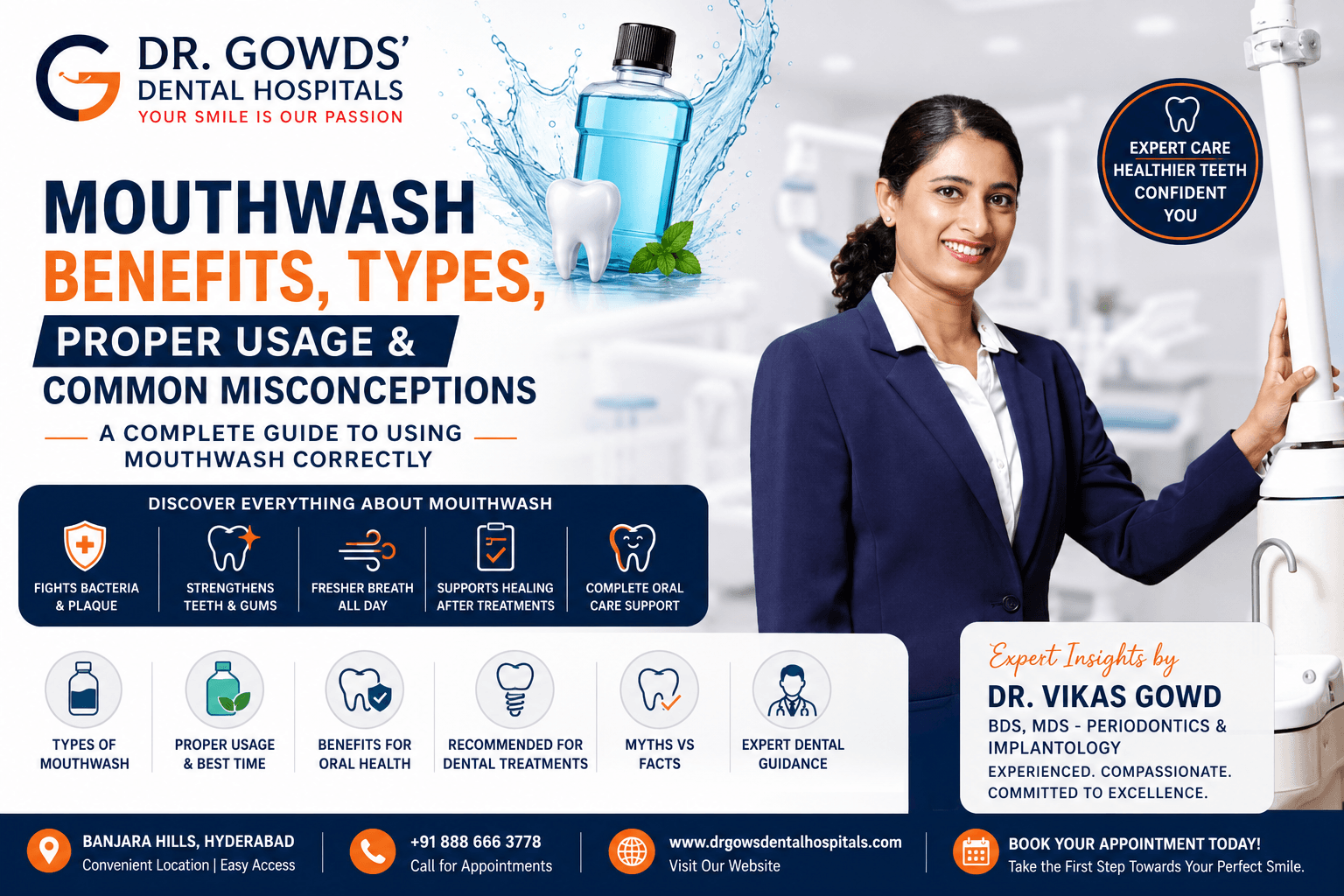
Complete Guide to Using Mouthwash Correctly for Better Oral Health
Mouthwash has become an essential part of oral hygiene routines for many people. From freshening breath to reducing harmful bacteria, different types of mouthwashes are now commonly recommended by dentists for improving oral health and supporting dental treatments.
However, many people still misunderstand:
- when to use mouthwash
- which type of mouthwash is best
- whether mouthwash can replace brushing
- and how long mouthwash should be used
At Dr Gowds Dental Hospitals, dentists often educate patients that mouthwash is a supportive oral hygiene product — not a replacement for brushing and flossing.
As highlighted by Dr. Vikas Gowd, proper oral hygiene should always focus on brushing, flossing, and professional dental care.
What Is Mouthwash?
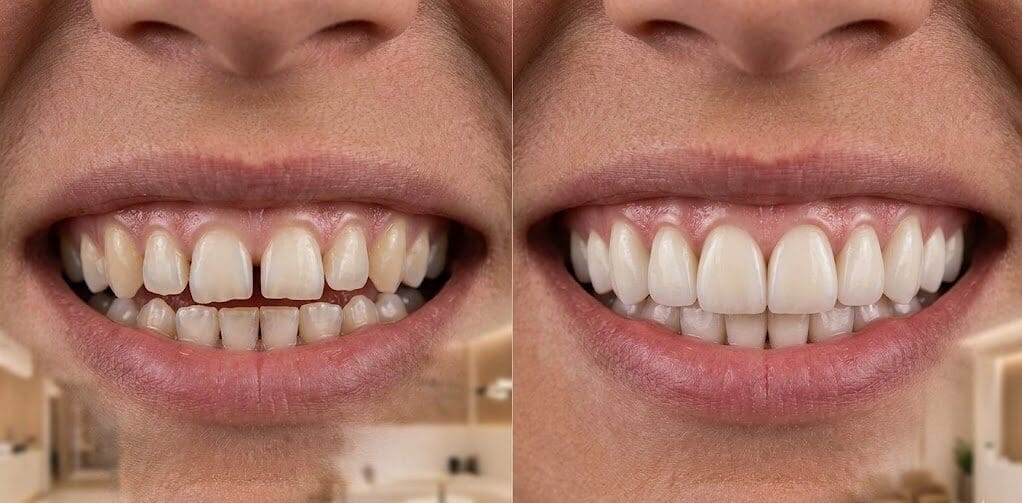
Mouthwash, also called a mouth rinse, is a liquid oral solution designed to:
- reduce oral bacteria
- improve breath freshness
- protect teeth and gums
- reduce plaque buildup
- and support healing after dental procedures
Different mouthwashes are formulated for different dental conditions. Some are designed mainly for cosmetic freshness, while others are therapeutic and prescribed by dentists for specific oral problems.
Why Is Mouthwash Used?
Using the right mouthwash can provide several oral health benefits.
Benefits of Mouthwash
Helps Reduce Harmful Bacteria
Therapeutic mouthwashes help lower bacterial levels inside the mouth and reduce infection risks.
Controls Bad Breath
Mouthwash is commonly used for temporary relief from halitosis and unpleasant mouth odor.
Reduces Plaque and Gum Inflammation
Certain medicated rinses help control plaque accumulation and gingivitis.
Strengthens Tooth Enamel
Fluoride-based mouthwashes support enamel remineralization and cavity prevention.
Supports Healing After Dental Treatments
Dentists often recommend mouthwash after:
- dental implants
- root canal treatment
- wisdom tooth removal
- gum surgeries
- orthodontic procedures
- and smile designing treatments
Can Mouthwash Replace Brushing?
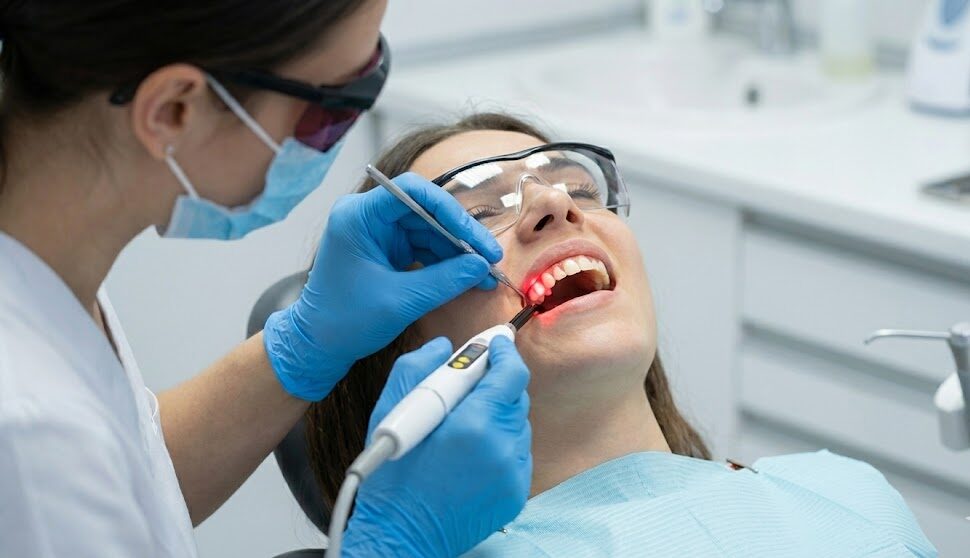
No. Mouthwash should never replace brushing and flossing.
One of the biggest misconceptions in dentistry is that mouthwash alone can keep teeth clean. While mouthwash can help reduce bacteria and improve freshness, it cannot mechanically remove plaque and food debris from teeth surfaces.
Plaque is a sticky bacterial layer that requires physical cleaning through:
- Brushing
- Flossing or interdental cleaning
- Mouthwash as supportive care
Dentists strongly recommend using mouthwash only as part of a complete oral hygiene routine.
Different Types of Mouthwash
Choosing the right mouthwash depends on oral health condition, age, sensitivity, and dental treatment needs.
Fluoride Mouthwash
Fluoride mouthwash is designed to strengthen enamel and reduce cavity risk.
Commonly Recommended For:
- children with cavity risk
- orthodontic patients
- enamel wear
- tooth sensitivity
- dry mouth patients
Benefits:
- remineralizes enamel
- reduces sensitivity
- protects against tooth decay
Usage:
Usually recommended once daily, preferably at night.
Chlorhexidine Mouthwash
Chlorhexidine is one of the most effective antibacterial mouthwashes in dentistry.
Common Uses:
- gingivitis
- gum infections
- periodontal treatment
- implant healing
- post-surgical care
Benefits:
- strong antibacterial action
- plaque reduction
- supports gum healing
Important Limitations:
Long-term overuse may cause:
- tooth staining
- altered taste
- tartar buildup
- oral irritation
Dentists usually recommend chlorhexidine mouthwash for short-term use only.
Alcohol-Based Mouthwash
Many commercial mouthwashes contain alcohol because it provides antiseptic effects and freshness.
Advantages:
- temporary bacterial reduction
- fresh breath
- halitosis control
Limitations:
Alcohol-based mouthwash may:
- dry oral tissues
- irritate sensitive gums
- worsen dry mouth
- cause burning sensation
These mouthwashes may not be suitable for elderly patients, children, or people with oral ulcers.
Alcohol-Free Mouthwash
Alcohol-free mouthwash is becoming increasingly preferred in modern dentistry.
Benefits:
- gentler on oral tissues
- safer for long-term use
- more comfortable for sensitive patients
- suitable after cosmetic dental procedures
These rinses are often recommended for:
- children
- implant patients
- veneers
- aligners
- dry mouth conditions
Herbal Mouthwash
Herbal mouthwashes use natural ingredients such as:
- neem
- clove
- tulsi
- aloe vera
- tea tree oil
Benefits:
- mild antibacterial action,
- soothing properties,
- anti-inflammatory support.
However, herbal mouthwash may not replace medicated mouthwash during active infections or advanced gum disease.
How to Use Mouthwash Correctly
The effectiveness of mouthwash depends greatly on proper usage.
General Guidelines:
- Use after brushing and flossing
- Swish for 30–60 seconds
- Avoid rinsing with water immediately afterward
- Avoid eating or drinking for 30 minutes
These steps help maximize the effectiveness of active ingredients.
Best Time to Use Mouthwash
Morning Use
Useful for:
- fresh breath
- bacterial reduction
- oral freshness
Nighttime Use
Often considered more effective because saliva production decreases during sleep.
Nighttime use is particularly beneficial for:
- fluoride mouthwash
- chlorhexidine rinses
- dry mouth management
Mouthwash for Children
Children can use mouthwash under proper supervision.
Recommended:
- alcohol-free pediatric rinses
- supervised fluoride rinses
- orthodontic mouthwash
Children below 6 years are generally not advised to use regular mouthwash because of swallowing risks.
Mouthwash After Dental Treatments
Dentists may recommend mouthwash after:
- dental implants
- veneers
- root canal treatment
- wisdom tooth extraction
- periodontal procedures
- laser dentistry
For cosmetic dentistry and veneers, alcohol-free and non-staining mouthwashes are usually preferred.
Common Mistakes Patients Make While Using Mouthwash
Overusing Mouthwash
Using excessive mouthwash may:
- disturb normal oral flora
- increase dryness
- irritate oral tissues
Using Mouthwash Immediately After Toothpaste
Some toothpaste ingredients can reduce the effectiveness of certain medicated mouthwashes.
Choosing Mouthwash Only Based on Advertisements
The ideal mouthwash depends on:
- gum condition
- cavity risk
- oral sensitivity
- age
- dental restorations
- overall oral health
Professional dental guidance is important before long-term use.
Why Professional Dental Guidance Matters
Patients often choose mouthwash without understanding its purpose or suitability.
At Dr Gowds Dental Hospitals, dentists provide personalized recommendations based on:
- oral health condition
- gum health
- implants or restorations
- orthodontic treatment
- cavity risk
- and long-term maintenance needs
Proper guidance helps patients maintain healthier smiles and avoid complications
Final Thoughts
Mouthwash can be a valuable addition to oral hygiene when used correctly and chosen appropriately. However, it should always be considered a supportive tool rather than a replacement for brushing and flossing.
Modern dentistry focuses on prevention, maintenance, and long-term oral health. Choosing the right oral hygiene products with professional guidance helps maintain healthy teeth, gums, and confident smiles for years to come.


One Response